




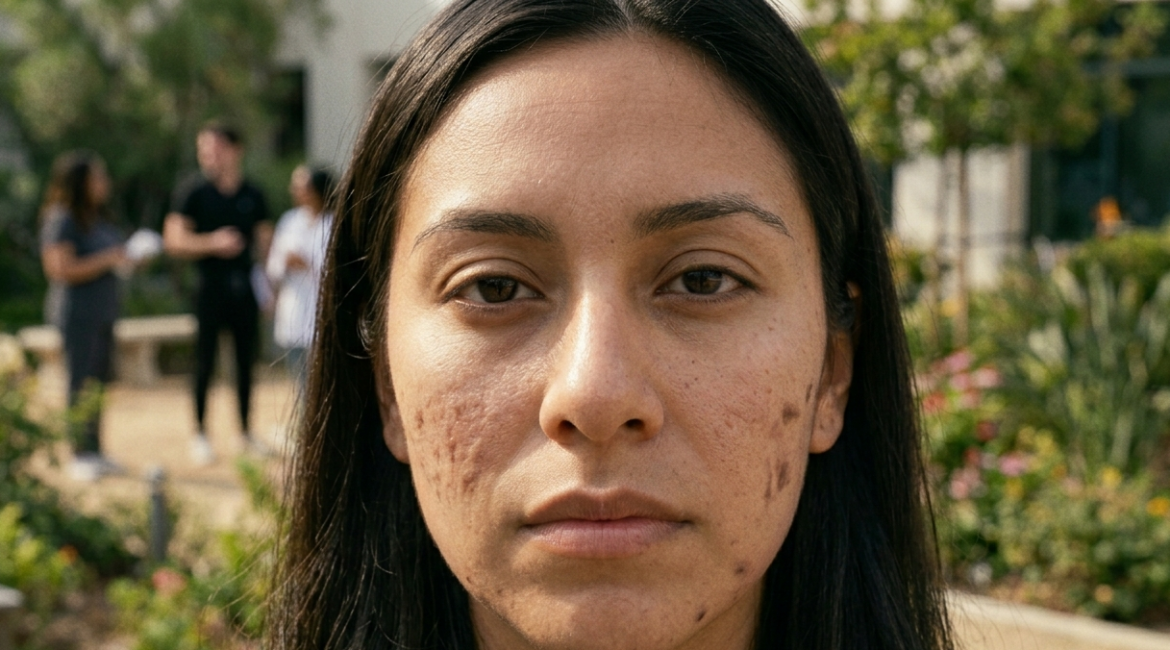
The link between UV exposure and scar hyperpigmentation often shows up when a scar seems to fade, then becomes more noticeable after time outdoors.
This happens because healing skin remains reactive beneath the surface, and when sunlight, heat, and visible light keep reaching the area, pigment cells may stay active instead of settling down.
In this article, you will learn why that happens, how light affects healing skin, and which photoprotection habits can make the biggest difference.
Let’s get into what your skin needs most.
Why Are Scars Vulnerable to the Sun?
Scars are more vulnerable to the sun because the skin is still rebuilding, even when it already looks closed.
According to the NHS, scars should be covered in the sun for at least 1 year. If you cannot cover the area, using SPF 30 or higher can help reduce the chance of the scar becoming darker.
Scarred skin does not behave exactly like normal skin. The outer layer may still be thinner, weaker, or more reactive, so sunlight can trigger pigment cells more easily. When that happens, the scar may turn darker instead of fading evenly.
Newer scars can also stay pink or red for longer because tiny blood vessels are still changing during healing. Sun exposure can make that redness look stronger, especially after a hot day outdoors.
What Is Scar Hyperpigmentation?
Scar hyperpigmentation, also known as post-inflammatory hyperpigmentation or PIH, develops when skin makes extra pigment while it is recovering from injury, acne, burns, friction, or treatment.
Dark marks happen because your pigment-making cells, or melanocytes, stay in overdrive while your skin heals. It’s a common cycle for deeper complexions and many Asian skin types, where pigment cells are naturally quick to react to any inflammation.
What starts as a tiny pimple, scratch, or burn can easily turn into a stubborn brown mark that lingers long after the wound has closed. Right now, your skin barrier is still finding its balance.
Exposure to sunlight, heat, or even just rubbing the area can keep the skin reactive and the mark dark. This is exactly why specialists often focus on calming and protecting your skin first.
You have to settle the inflammation and shield the area properly before you can effectively treat the pigmentation itself. Without that protective foundation, treatments might just trigger more irritation.
How UV Exposure and Scar Hyperpigmentation Are Linked Through Melanocyte Activation

UV exposure worsens scar hyperpigmentation by keeping pigment cells active while the skin is still trying to heal.
A scar can look calm on the surface, but the skin underneath may still be in repair mode. When ultraviolet light keeps reaching that area, it can signal melanocytes to produce more melanin. Melanocytes are the cells that make pigment, and melanin is the colour they release into the skin.
Research on UV signalling shows that ultraviolet radiation can trigger pathways involved in the skin’s pigment response. This includes signals that affect melanocytes and melanin production, which helps explain why a healing mark can darken again after repeated light exposure.
Another review on skin pigmentation explains that ultraviolet radiation can influence melanogenesis, which is the process of making pigment. It also describes how alpha-melanocyte-stimulating hormone, or alpha-MSH, can stimulate pigment production through melanocytes.
This is why scar hyperpigmentation is not simply leftover colour. The skin may still be receiving active signals to make more pigment. If those signals continue during recovery, the mark can look darker, sharper, and slower to fade.
Why Is Laser Not Always the Main PIH Driver?
Laser treatment can trigger healing, but PIH often develops from what happens after, especially sun exposure, heat, friction, or picking during recovery.
In many cases, melanocyte activation by UV becomes the bigger driver during recovery. The skin has already been stimulated by treatment, so sunlight, heat, friction, picking, and natural pigment reactivity can keep melanocytes switched on after the procedure.
If the scar darkens after treatment, the issue may not be the laser alone. It may be that the skin stayed exposed while it was still vulnerable.
This is why photoprotection is not a small aftercare step. It is part of controlling the pigment response while the skin heals.
After laser, the pattern of pigmentation matters. Darkening limited to treated zones may suggest treatment-related inflammation, while pigment on high-friction or sun-exposed areas may point to rubbing, heat, or UV exposure during recovery. This helps guide the aftercare plan.
3 Types of Light That Contribute to Hyperpigmentation
Not all skin darkening comes from direct sunburn. Different kinds of light can trigger pigment, especially in healing scars or skin that marks easily.
Below are the main types involved:
- UVA rays: These are harder to avoid than most people think. They pass through glass, so your scar still gets exposed while driving or sitting by a window. Over time, that quiet exposure can deepen pigment.
- UVB rays: This is the burning ray. If healing skin gets irritated, the scar can turn darker or stay red longer than expected.
- Visible light: Daylight can still darken a mark, even when you are not getting sunburnt. This tends to happen more if your skin marks easily.
Who is More Prone to UV-Induced Hyperpigmentation?
Some people are more prone to UV-induced hyperpigmentation because their skin produces pigment more quickly after light exposure, inflammation, or irritation.
Below are the groups who may be more likely to develop darker or longer-lasting marks:
- Deeper Skin Tones. Naturally active pigment cells mean marks form quickly and often stay much longer after UV exposure.
- Asian Skin. If your skin darkens easily after a scratch or breakout, you’ll need extra sun protection while you heal.
- Active Skin Damage. Whether it’s eczema, a fresh cut, or a burn, inflamed skin overproduces pigment the moment light hits it.
- Melasma History. Even brief sun exposure can “wake up” existing patches or make old pigmentation resurface.
- Daily Commuters. You don’t need a beach trip to see damage. Incidental sun from driving or walking builds up fast.
- Active Treatments. Certain meds, chemical peels, and lasers leave your skin temporarily defenseless against UV rays.
Signs Your Skin May Be More Prone to PIH
Your skin may give you clues before a mark becomes stubborn. These signs can help you understand whether you need a more careful recovery and photoprotection plan.
Signs your skin may mark more easily include:
- Dark marks that stay longer than usual: Marks that linger after acne or irritation may suggest that your skin holds onto pigment easily.
- Colour develops after minor irritation: A light scratch, picked spot, or mild irritation can still leave colour behind.
- Your skin keeps getting re-triggered: Ongoing acne, friction, heat, or picking can keep giving pigment more chances to build.
- Pigmentation happened after earlier treatments: Previous darkening after treatment may mean your skin needs a slower, more cautious recovery plan next time.
Early pigment history is important because skin often repeats its past behaviour. If acne, scratches, peels, or lasers have left dark marks before, the treatment settings, recovery timeline, and photoprotection plan should be more conservative from the start.
7 Photoprotection Protocols For Preventing Scar Hyperpigmentation
Protecting a scar from darkening is not as simple as putting on sunscreen once in the morning. Healing skin reacts faster than normal skin, so it needs protection from light, heat, rubbing, and small daily habits that can quietly keep pigment active.
Below are the main photoprotection steps that matter most when you are trying to prevent scar hyperpigmentation:
1. Daily Broad-Spectrum Protection
Use broad-spectrum sunscreen every day, because healing scars can still react to light even on cloudy days or during short outdoor trips.
For scar hyperpigmentation, a mineral sunscreen with zinc oxide and/or titanium dioxide is often a practical choice because it sits on the skin’s surface and is usually better tolerated by sensitive or healing areas.
If your skin marks easily, a tinted mineral sunscreen may be especially useful because iron oxides can help protect against visible light, which may also contribute to pigmentation in deeper skin tones.
Choose SPF 30 or higher for daily use, and SPF 50 if the scar is fresh, exposed, or you spend more time outdoors.
The best sunscreen is the one your skin can tolerate consistently, so avoid formulas that sting, feel too drying, or make you rub the scar repeatedly during application.
2. Timing and Behavioural Strategies
The timing of sun exposure matters more than many people realise. Try to keep healing scars out of direct sunlight between 10 AM and 4 PM, when UV levels tend to be stronger. A quick lunch outside, a short walk, or sitting near a bright window can still affect skin that is trying to settle.
It also helps to think about your usual routine. Driving, commuting, running errands, and sitting beside glass can expose the skin to light without feeling like “sun exposure”. For pigment-prone scars, these small exposures can build up.
3. Physical Barriers and Environmental Protection
Sunscreen helps, but covering the scar is often the more reliable layer. Your doctor may suggest clothing, hats, masks, dressings, or UPF-rated fabric to keep light off healing skin. This is useful for scars on exposed areas such as the face, neck, chest, arms, or hands.
If the scar is new or still changing in colour, do not rely on sunscreen alone. Covering the area protects your skin more reliably, especially right after treatment or when you are out for hours.
4. Specialised & Targeted Protocols
Post-procedure photoprotection should match the treatment done, because a laser, peel, microneedling session, TCA CROSS, subcision, or radiofrequency treatment can leave the skin vulnerable in different ways.
After laser or resurfacing, doctors may ask you to avoid strong skincare until redness, peeling, crusting, or sensitivity has settled. After TCA CROSS, the small treated spots should be left to form and shed their crusts naturally. After microneedling or radiofrequency microneedling, the priority is usually to keep the skin calm while tiny channels close and redness fades.
For subcision, the concern is often bruising and swelling, so rubbing, massaging, or pressing the area too early may irritate healing tissue. For chemical peels, peeling skin should not be pulled off, even when it looks ready, because this can trigger more inflammation and darkening.
Your doctor may also adjust when you restart sunscreen, retinoids, acids, vitamin C, or pigment creams based on how intact your skin barrier is. This is why post-procedure protection should follow the exact treatment timeline, not a general aftercare routine.
5. Supporting Skin Recovery Alongside Protection
Sun protection works better when the skin is calm. Keep the area moisturised, avoid harsh scrubs, and do not use too many active ingredients at once. If the skin feels hot, tight, itchy, or easily irritated, it is more likely to react badly to light and friction.
Vitamin C may also be used in some routines to support antioxidant protection during the day. It cannot replace sunscreen, but your doctor may include it when your skin is calm enough to handle it.
6. Topical Options
If the mark keeps getting darker, your doctor may use prescription creams to calm pigment while the skin heals.
Here are some options that may be considered:
- Hydroquinone may be used for stubborn pigmentation that is not settling with basic care. At Sozo Aesthetic Clinic, Hydroquinone Triluma may be considered for suitable patients because it combines hydroquinone, tretinoin, and fluocinolone acetonide to target pigment, support skin turnover, and reduce inflammation. It should only be used under medical supervision, especially for skin that marks easily.
- Retinoids may support skin turnover, but they should be introduced carefully because healing or sensitive skin can react badly.
- Azelaic acid may suit some pigmentation-prone skin because it can help calm inflammation while supporting pigment control.
- Vitamin C may support antioxidant protection and skin recovery, but it works better as part of a wider routine, not as a standalone fix.
7. In-Clinic Treatments
If pigmentation does not improve with careful home care, in-clinic treatments may be discussed.
Here are some options that may be considered:
- Pico laser may be discussed for selected pigmentation concerns. Suitability depends on skin type, pigment depth, treatment history, and PIH risk, so settings and aftercare need careful medical planning.
- Microneedling may be used when pigment and texture appear together, but a doctor should assess suitability, as recovery needs careful aftercare and strict sun protection.
The right option depends on your skin tone, scar type, pigment history, and how easily your skin reacts after irritation or treatment. That is why photoprotection is not just a finishing step. It is part of the treatment plan itself.
When to Seek Medical Advice For Persistent Pigment Changes
Not every dark mark needs treatment straight away. But when a mark stops fading in the usual way, it is worth looking more closely, especially in Asian skin, where post-inflammatory hyperpigmentation can last longer and show up more easily after acne, friction, or treatment.
Some marks fade over time, but others do not, so it helps to understand what is slowing recovery instead of waiting it out.
This is where a proper medical assessment becomes especially important. Dr Justin Boey, Medical Director of Sozo Clinic in Singapore, has experience assessing and treating Asian skin, where lingering pigmentation can be a greater concern.
In cases like these, the focus is not only on how dark the mark looks, but on what may still be keeping it active, such as ongoing acne, irritation, heat, or a recovery plan that does not suit the skin well.
Below are some situations where it makes sense to stop waiting and have the area assessed properly:
- The mark is not fading as expected. If it still looks much the same after a long period of careful recovery, it may need more than time and basic protection.
- The area looks darker instead of calmer. That can be a sign that something is still driving the pigment, whether it is light exposure, irritation, or another trigger you may not have noticed.
- You cannot tell whether you are dealing with pigment, scar texture, or a mix of both. They do not respond in the same way, so guessing can easily lead you towards the wrong kind of treatment.
- Your skin keeps leaving dark marks behind. When that pattern repeats after acne, friction, or treatment, it is often worth understanding how your skin behaves before the marks become harder to manage.
- You are thinking about treatment, but do not know what your skin is likely to tolerate well. A medical review can help clarify which options may be suitable for your skin, instead of rushing into treatment that may not match your pigment risk or scar type.
Conclusion
UV exposure and scar hyperpigmentation are closely connected because healing skin can stay reactive long after the surface looks calm.
When light, heat, and irritation keep melanocytes active, a scar may darken, linger, or become more noticeable instead of fading evenly.
That is why photoprotection matters as part of recovery, not just aftercare, especially if your skin marks easily after acne, treatment, or irritation.
If you are unsure why a scar is staying dark or how to protect your skin properly, a consultation with Sozo Aesthetic Clinic can help you understand your pigment risk and next steps.