


Acne scars can feel frustrating when they do not improve, no matter what you try. You may see dents, bumps, or uneven texture in the mirror and wonder why some treatments work for others but not for you.
The truth is that the best acne scar treatment is different for everyone. Your scar type, your skin tone, and even your budget all influence which option may be more suitable for your skin and expected comfort level.
In this guide, you will learn how to identify your scar type, understand how skin tone affects treatment safety, and explore the options available across different price ranges.
You will also discover why a personalised plan helps you achieve more refined-looking skin over time.
Understanding the Different Types of Acne Scars
Acne scars fall into two main types: atrophic scars, which sit below the skin surface, and hypertrophic scars, which rise above it. Identifying the type you have helps you choose the best acne scar treatments.
Below are the main categories and the specific scars within them.
Atrophic (Depressed) Scars
Atrophic scars develop when the skin loses collagen during healing. These scars create visible dips or uneven texture.
Here are the most common types you may notice:
- Ice Pick Scars
Ice pick scars are deep, narrow marks that resemble tiny punctures. They extend into the skin and are often the most challenging to correct.
- Boxcar Scars
Boxcar scars are round or oval depressions with sharp edges. They can be shallow or deep and often give the skin a pitted look.
- Rolling Scars
Rolling scars create a wavy texture across the skin. They form when fibrous bands pull the skin down from underneath.
- Mixed Acne Scars
Many individuals have a mix of ice pick, boxcar, and rolling scars. This combination is sometimes approached with multiple techniques, depending on what is suitable for your skin.
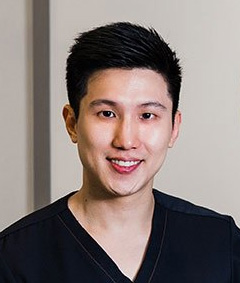
Dr. Justin Boey explains why in-person scar assessment matters:
“Through careful skin assessment, mixed acne scars are assessed in person. This allows me to examine the details within the scars. Scars at different depths and textures often require a targeted blend of techniques.”
Hypertrophic (Raised) Scars
Hypertrophic scars form when the skin produces too much collagen, causing the scar to rise above the surface.
Here are the two types commonly linked to acne:
- Hypertrophic Scars
Hypertrophic scars are thick and raised but stay within the original acne area. They often feel firm or rubbery.
- Keloid Scars
Keloid scars grow beyond the boundaries of the original acne spot. They are raised, hard, and may become darker over time.
Other Post-Acne Marks
These marks are not true scars, but they can appear after acne and influence how even or clear your skin looks:
- Post-Inflammatory Hyperpigmentation (PIH)
PIH appears as flat brown or dark spots after inflammation. It is more common in darker skin tones due to increased melanin activity. PIH does not affect skin texture.
- Post-Inflammatory Erythema (PIE)
PIE appears as red or pink marks after acne heals. It is more common in lighter skin tones and results from dilated blood vessels rather than tissue damage. PIE is also flat and not a true scar.
How Skin Tone Affects Your Treatment Options
Your skin tone influences how your skin reacts to laser, heat-based, and energy-based treatments.
Different skin tones carry different levels of melanin, which affects both treatment safety and the risk of pigmentation.
Below is a clear breakdown to help you understand how this affects your choices:
- Lighter skin tones (Fitzpatrick I–III)
Generally tolerate a wider range of laser settings. They carry a lower risk of post-inflammatory hyperpigmentation, which means both non-ablative and ablative options are usually suitable.
These skin tones are less reactive to heat, giving you more flexibility when choosing stronger resurfacing treatments.
- Medium to darker skin tones (Fitzpatrick IV–VI)
Contain higher melanin levels, which makes the skin more sensitive to heat and inflammation. This increases the risk of pigmentation after aggressive treatments.
Low-heat, non-ablative lasers and radiofrequency microneedling tend to be safer choices because they minimise heat exposure. These skin tones also benefit from careful energy settings, cooling methods, and pigment-safe protocols.
Choosing the Best Acne Scar Treatment Based on Scar Type and Budget
Different acne scars require different approaches. Matching each scar type with an appropriate technique helps you understand which options may be appropriate for your concerns.
Below is a clear and clinically supported guide based on the main scar types:
| Scar Type / Concern | Common Treatment Options to Consider | Typical Fee Guide (Per Session) |
|---|---|---|
| Rolling Scars (Atrophic) | INFINI RF, Fractional Pico Laser, Fractional CO₂ Laser | From $150 to $850 |
| Ice Pick Scars | Subcision with fillers, TCA CROSS, Fractional CO₂ Laser | From $300 to $450 |
| Boxcar Scars | Subcision with fillers, TCA CROSS, Fractional CO₂ Laser | From $300 to $450 |
| Mixed Atrophic Scars | Subcision, TCA CROSS, Fractional CO₂, RF Microneedling, Pico Laser | Fees vary depending on treatment mix. Please enquire |
| Post-inflammatory Erythema (PIE) | Picosecond Gold Toning (595 nm) | Please enquire |
| Post-inflammatory Hyperpigmentation (PIH) | Picosecond Laser | From $150 |
| Hypertrophic Scars | Corticosteroid Injections, selected laser options for raised tissue | Please enquire |
| Keloid Scars | Corticosteroid Injections, collagen-modulating therapies | Please enquire |
| All Scar Types (Comprehensive Plan) | Customised combination programme | Please enquire |
If you are unsure which scar type you have, a professional assessment can help you understand your options clearly.
A personalised review at Sozo Aesthetic Clinic allows you to discuss treatments suited to your skin, goals, and comfort level without pressure or assumptions.
This can help you make an informed decision about what feels right for your skin journey.
Here is the approach Dr. Justin Boey uses for optimal assessment:
“My preferred method to achieve optimal results: scar assessment is performed in person and under tangential lighting, including palpation and depth evaluation. These findings influence treatment recommendations.”
How to Plan Your Acne Scar Treatment Based on Budget
Your budget influences how you approach your acne scar journey, but you still have flexible options across different price ranges.
- For a more affordable starting point, Pico Laser and TCA CROSS offer accessible entry-level treatments for pigmentation and deep scars.
- Mid-range choices such as Subcision or Nano-Fractional Radiofrequency suit individuals who want stronger improvements without committing to higher-priced options.
- For deeper or more persistent scars, premium techniques such as INFINI RF or Fractional CO₂ can be considered because they target the deeper layers where many scars sit.
You can also space treatments over time to manage costs while still working steadily towards a smoother skin surface.
Choosing Safe Treatments Based on Skin Tone

Your skin tone influences how safely your skin can handle heat, light, and energy-based treatments. Different skin tones have different levels of melanin, and this affects which methods are suitable for you.
Below is a clear, easy-to-scan guide to help you choose options that support safer treatment outcomes:
- If you have lighter skin tones (Fitzpatrick I–III)
You generally have more flexibility with laser settings because your skin has a lower risk of developing post-inflammatory hyperpigmentation (PIH).
Both ablative and non-ablative treatments may be appropriate, depending on your scar type and comfort level.
- If you have medium to darker skin tones (Fitzpatrick IV–VI)
Your skin contains more melanin, which means it can be more reactive to heat.
Low-heat or non-ablative lasers, as well as radiofrequency microneedling, are usually safer because they reduce the chance of unwanted pigmentation.
Cooling measures and pigment-safe protocols are also important during treatment.
- If you are prone to pigmentation
You may benefit from gentler settings, shorter pulse durations, or treatments that avoid heat altogether.
Your doctor may also recommend using pigmentation-control skincare before or after treatment to support even healing.
- If you have sensitive or reactive skin
You may respond better to treatments with controlled depth and minimal thermal energy.
Options like radiofrequency microneedling or carefully adjusted fractional lasers may be considered.
Why Personalised Treatment Selection Is Crucial for Effective Results
Personalised treatment matters because acne scars are not all the same. Each scar varies in depth, shape, and sensitivity, which means the most suitable approach depends on what your skin actually needs rather than a single universal solution.
At Sozo Aesthetic Clinic, personalised selection is part of the way care is delivered. Under the guidance of Dr. Justin Boey, Medical Director with extensive training in non-surgical aesthetic procedures, your concerns, skin tone, scar pattern, and treatment preferences are reviewed carefully so that any recommendation aligns with what feels realistic and comfortable for you.
This type of planning also helps you make sense of the many options available. When your doctor explains how each method fits into your skin profile, it becomes easier to decide what you want to prioritise, whether you prefer gentler steps or a more structured plan.
A tailored approach also supports you in pacing your treatments according to your lifestyle. This is helpful if you manage work commitments, have limited downtime, or simply prefer a gradual approach that aligns with your skin’s needs and response.
FAQs
Can acne scar treatments be combined in the same session?
Some treatments can be combined when suitable, while others are spaced out for safety. Your doctor will guide sequencing based on your skin response.
How long should I wait between acne scar treatment sessions?
Most treatments are spaced several weeks apart to allow proper healing. The interval depends on the method used and how your skin recovers.
Do acne scars get harder to treat with age?
Scars may appear more noticeable over time due to natural collagen changes. Earlier treatment can support better texture management but is not mandatory.
Can acne scars return after treatment?
Treated scars do not usually return, although new acne breakouts can create new marks. Keeping acne controlled may help maintain smoother-looking skin.
Conclusion
Choosing the best acne scar treatment depends on recognising your scar type, understanding how your skin tone responds to different technologies, and selecting options that match your budget.
When you take these factors into account, you are better equipped to make choices that feel appropriate and realistic for your situation.
If you feel unsure about where to start, Sozo Aesthetic Clinic can guide you towards options that are both suitable and manageable.
With a clearer understanding of your scar pattern and available treatments, you can plan each step with confidence and realistic expectations.
