


Acne scar treatment works by matching a specific mechanism to a specific structural defect, so the scar type sitting on your face determines which modality earns a place in your plan. A patient with ice pick scars needs a different intervention from a patient with rolling scars, and most patients carry more than one type at once. This guide walks through scar identification, severity grading, and the modality each pattern responds to, so you arrive at a consultation already able to ask the right questions.
What Type of Acne Scar Do I Have?
Acne scars fall into three depressed (atrophic) types and one raised type, and the shape of the depression determines the treatment mechanism that reaches it. Ice pick scars form narrow, deep pits, boxcar scars form wide, sharply-edged depressions, and rolling scars form broad, shallow undulations with sloping edges. Hypertrophic and keloid scars raise above the skin surface rather than depress below it, the opposite structural problem entirely.
A triage nurse sorts patients by the mechanism of injury before deciding which department treats them, not by how much a patient is complaining. Acne scar assessment works the same way: the physical shape of the depression, not the visible severity alone, routes the scar to its matched modality.
Hypertrophic and keloid scars raise above the skin surface, while ice pick, boxcar, and rolling scars depress below it.¹ Atrophic, depressed scars respond to the resurfacing and collagen-remodelling treatments this guide covers, TCA CROSS, subcision, and RF microneedling among them. Raised scars need a different treatment approach that a consultation assesses separately. Active acne rules out scar treatment until it is under control, and before punch excision your doctor also checks for a history of keloid scarring, bleeding risk, uncontrolled illness, recent sun damage and pregnancy.
How Severe Are My Scars? The Goodman & Baron Grading System
A scar’s grade, not just its type, sets the treatment intensity a case actually needs. The Goodman & Baron Qualitative Global Scarring Grading System classifies post-acne scars into four grades.
| Grade | Presentation | Concealability | Typical Treatment Intensity |
|---|---|---|---|
| Grade 1 | Colour change (macular), no textural change | Fully concealed by makeup | Single-modality, fewer sessions |
| Grade 2 | Mild textural change | Concealed by makeup or facial hair | Single-modality, standard session count |
| Grade 3 | Moderate depression | Not concealed by makeup, flattens on manual stretching | Combination protocol likely |
| Grade 4 | Severe depression | Not concealed, does not flatten on stretching | Combination protocol, extended course |
Severity changes treatment intensity, not treatment type alone. Mild scars typically respond to fewer sessions of a single modality; severe scars typically need combination protocols across multiple sessions to reach the same threshold. This four-grade framework complements the fuller walkthrough in Acne Scar Severity Grading and How It Affects Your Treatment Plan.
Which Treatment Suits Ice Pick Scars?
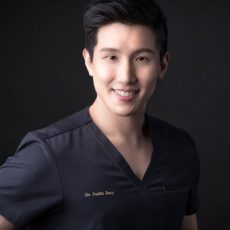
Ice pick scars respond to treatments that work on each narrow pit one at a time. At Sozo Aesthetic Clinic, Dr Justin Boey treats ice pick scars with either spot fractional CO2 laser, which targets each pit, or TCA CROSS, which chemically reconstructs the base of each pit. After assessing your scars, he often recommends other treatments over TCA CROSS. For TCA CROSS specifically, a head-to-head trial recorded a 32.68% mean reduction in Goodman-Baron scar score with TCA CROSS against 22% with microneedling over three sessions, with 24% of TCA CROSS patients reaching over 75% improvement against 16% of microneedling patients.
TCA CROSS treats the base of one pit at a time, the way a dentist fills one cavity rather than resurfacing an entire tooth. A separate trial recorded marked improvement in 60% of patients, moderate improvement in 26.7%, and mild improvement in 13.3% across a 15-patient treatment arm. A systematic review separately recorded TCA CROSS producing greater than 70% scar improvement in 73.3% of patients across a 30-patient cohort. The main difference between TCA CROSS and subcision is mechanism and target scar shape: TCA CROSS chemically reconstructs narrow, deep pits, while subcision releases the fibrous bands that tether rolling scars, the modality choice between the two following scar shape rather than personal preference. This matching reinforces the detail in Ice Pick Acne Scars.
Which Treatment Suits Boxcar Scars?
Fractional RF microneedling treats boxcar scars by remodelling collagen across the flat base of each depression. The device passes across a broader treatment area in one session rather than spot-treating a single pit. A 31-patient study of Grade 3 and Grade 4 boxcar and rolling scars recorded improvement by two or more severity grades in 80.64% of patients using RF microneedling as a standalone treatment.
Where TCA CROSS restores individual pits, RF microneedling remodels collagen across a wider treatment field, which is why the two modalities combine rather than compete when a patient presents with both scar shapes on the same face. Combining fractional laser with bipolar radiofrequency produced a 92% total effective rate against 68% for fractional laser alone, across a 50-patient randomised trial. Patient satisfaction reached 96% against 84% respectively. This mechanism reinforces the detail already covered in Boxcar Acne Scars.
Which Treatment Suits Rolling Scars?
Subcision releases the fibrous bands tethering rolling scars to deeper tissue, letting the skin surface lift back into place. A systematic review recorded improvement ranging from 10% to 100% across subcision studies, with one trial reporting all Grade 4 scars improving to Grade 2 after treatment. Injectable PMMA dermal filler improved 84% of the scars it treated across a separate 147-patient cohort in the same review.
A rolling scar behaves like reconstructive surgery’s post-operative adhesion: fibrous tissue anchors the scar to a fixed point beneath the surface, rather than the surface itself losing tissue, which is why releasing the tether, not filling the depression, restores the surface. Rolling Acne Scars validates this mechanism against the full causes-and-formation picture.
Do I Need One Treatment or a Combination?
Most acne scarring presents mixed scar types on the same face, so a combination protocol treats each scar type with its matched modality in one course. A single modality suits a patient whose scars are uniform in type and grade; three modalities in one session suit a patient with mixed ice pick, boxcar, and rolling scars. In Dr Boey’s experience, a treatment that does not match the scar type usually leads to one of two outcomes: little visible improvement, or complications. Single-Modality vs Combination Acne Scar Treatment compares session structure, cost, and total downtime between the two approaches in full.
Assessment identifies every scar type and grade present, then matches each one to the modality with published evidence for that presentation. Dr Justin Boey is the only doctor at Sozo Aesthetic Clinic, so the doctor who assesses your scars is the same doctor who performs each treatment in your course.
How Much Downtime Does Each Treatment Involve?
Downtime varies by modality. TCA CROSS involves a small scab over each pit it treats that develops within two to three days and falls off within three to seven days. Subcision and RF microneedling involve redness and swelling that typically settles within a week. Combination sessions extend total downtime across every modality the session combines. Acne Scar Treatment Downtime: How to Plan Around Work and Life facilitates planning time off work around whichever modality or combination a treatment plan uses.
| Modality | Downtime Onset | Typical Duration | Mechanism |
|---|---|---|---|
| TCA CROSS | Scab forms within 2–3 days | Falls off within 3–7 days | Chemical reconstruction, spot-applied |
| Subcision | Immediate bruising and swelling | Typically settles within a week | Tether release, broad-area |
| RF Microneedling | Immediate redness | Typically settles within a week | Collagen remodelling, broad-area |
| Combination Session | Onset varies by modality mix | Extends across modalities used | Matched to each scar type present |
Does Scar Age Change Which Treatment Fits Me?
Scar age does not change treatment eligibility. A scar formed ten years ago carries the same structural defect a newly formed scar carries, so the same modality-matching logic applies regardless of when the scar formed. Consultation assesses each scar on its type and grade, not on how long it has been present. Older scars usually need more sessions, not a different kind of treatment.
This matters because patients who have lived with scarring for many years often tell Dr Boey they expect a poor outcome, much as orthopaedic practice once assumed an old fracture nonunion sat beyond correction. Modern orthopaedic technique now treats a nonunion using the same structural principles that guide a fresh fracture; acne scar tissue carries the same standing logic.
Getting a Treatment Plan Matched to Your Scars
Correct scar-type identification facilitates the modality-matching decision every patient faces before committing to a course, which is why the assessment builds directly on the acne scars overview. A consultation at Sozo Aesthetic Clinic reviews your medical history, feels each scar for depth and tethering, checks your Fitzpatrick skin type, and grades every visible scar by type and severity before setting out which modalities, alone or in combination, match your scars. Dr Boey suggests one question to ask before you choose: which combination of treatments suits my scars? Most Sozo patients weigh results against cost, and cost is the main reason they delay treatment. A full course at Sozo typically costs S$1,800 to S$3,500 for mild to moderate scarring and S$3,500 to S$7,000 for severe scarring.