

Most acne scarring responds to a standard course of two to six sessions with one or two modalities. Severe, long-standing, or mixed-type scarring is different: it needs a broader plan, more sessions, and a sequence that combines more than one technique, which is what this page walks through.
How Do You Know If Your Scarring Counts as Severe?
What Counts as Severe Acne Scarring?
Severe acne scarring meets Goodman and Baron Grade 4: scarring stays visible from more than 50cm away and does not flatten when the surrounding skin is stretched manually. Severe scarring is uncommon: Singapore cohort data puts Grade 4 scarring at 0.2–0.3% of scarred patients, with mild Grade 1 scarring the most common presentation instead.
Grading matters because it sets the plan, not just the label. Our full grading guide covers all four Goodman and Baron grades in detail; the short version for severe cases is that Grade 3 (moderate, obvious but not flattened by stretching) and Grade 4 (severe, doesn’t flatten at all) are the two grades that typically move a patient from a standard course onto the fuller protocol this page describes. Dr Justin Boey grades severity on the Goodman and Baron scale at Sozo Aesthetic Clinic and finds it generally accurate in practice.
What a Full Treatment Plan for Severe Scarring Looks Like
What Does a Full Treatment Plan for Severe Acne Scarring Involve?
A full treatment plan for severe scarring sequences more than one modality across more visits than a standard course, rather than repeating a single technique. Deeper or long-standing scars typically need a broader treatment plan and more sessions than milder cases, and a doctor sequences treatment order so each modality addresses the specific structural defect it targets (tethering, volume loss, or surface texture) before the next stage begins. At Sozo, a severe-scar plan usually starts with subcision and laser treatment.
A severe or mixed-type case commonly combines more than one of our standard modalities rather than relying on a single one:
- Subcision for tethered, rolling scars where fibrous bands pull the skin down from beneath
- Spot fractional CO2 laser or TCA CROSS for ice pick scars, working on each narrow pit individually
- Fractional CO2 or Pico laser resurfacing for boxcar and rolling scars, remodelling the surface and collagen
- INFINI or EndyMed fractional RF microneedling for deeper collagen remodelling that reaches beyond what surface lasers touch
- Dermal filler or Polynucleotide for volume loss under rolling or boxcar depressions
Our single-modality vs combination comparison sets out the trade-offs between treating with one technique and combining several; our combination protocol page walks through how we sequence subcision and fractional laser together for mixed morphology. This page picks up where those leave off: what changes when the scarring itself, not just the mix of types, is severe.
How Many Sessions Does Severe Acne Scarring Typically Need?
Moderate to severe acne scarring typically needs four or more sessions, against two or three for mild cases, and complex or mixed scarring moves to a comprehensive, staged programme rather than a fixed session count. Sessions space three to eight weeks apart, and progress builds gradually from session to session, which is why Sozo quotes severe cases in a range rather than a fixed number. As one example, Dr Boey describes a patient on a combined plan who improved by about 10% per session and reached roughly 50% after five sessions. Results vary between patients, depending on scar type, skin response and how much new collagen the skin produces.
That spacing is deliberate, not a scheduling constraint. Each session needs time to heal and for collagen remodelling to show its effect, and a doctor chooses the next treatment based on how the previous session actually responded rather than following a plan the clinic set before treatment began. The most common setback Dr Boey sees is biological: some patients produce less new collagen in response to treatment, which limits how far each session moves the scar.
Inside a Combined-Modality Session
Does Combining Three Treatments in One Visit Mean Three Separate Procedures Back to Back?
Combining modalities in one visit means each treatment runs back to back within the same appointment, not across separate bookings. Downtime after a combined session follows the single most intense treatment in the protocol, not the sum of each one: subcision paired with INFINI RF still resolves on subcision’s own 2–5 day timeline, for example.
| Combined Pairing | Downtime | What Governs Recovery |
|---|---|---|
| Subcision + INFINI RF | 2–5 days | Subcision |
| Fractional CO₂ + Subcision | 3–5 days | Fractional CO₂ Laser |
| Pico Laser + Polynucleotide | 1–2 days | Pico Laser |
Full per-treatment downtime detail sits on our downtime and recovery guide, which covers every modality individually as well as these combined pairings.
What Results to Realistically Expect
How Much Improvement Can I Expect From a Full Treatment Plan for Severe Scarring?
For severe scarring, Dr Boey usually quotes an average improvement of 50 to 70%, with most cases reaching 70 to 80%, and confirms a realistic range for each case at consultation. Published trials support combining treatments: fractional laser with bipolar radiofrequency reached a 92% total effective rate against 68% for fractional laser alone, and RF microneedling alone improved Grade 3 and Grade 4 scars by two or more severity grades in 80.64% of patients in a 31-patient study. Individual results vary by scar type, depth, collagen response, and how many sessions a patient completes.
Severe scarring also carries a measurable quality-of-life cost that milder scarring doesn’t: in one 175-patient study, 69.2% of people with severe or very severe scarring reported a significant quality-of-life impact, against 24.7% of those with mild scarring, and scar severity showed a significant statistical link to both anxiety and depression scores.
Does Scar Age Change the Plan?
Does the Treatment Plan Change if My Scars Are Old or Long-Standing?
Scar age does not rule out treatment. Older scars remain candidates for the same modalities that treat recent ones. Deeper or long-standing scars typically need more sessions or a broader treatment plan than recent, shallower scarring, not a fundamentally different protocol. Patients with long-standing scars often tell Dr Boey they expect a poor outcome, yet scar age changes the session count rather than eligibility.
What a Full Severe-Scarring Programme Costs
What Does a Full Severe-Scarring Treatment Programme Cost?
A full course of treatment for severe scarring at Sozo Aesthetic Clinic typically costs S$3,500 to S$7,000, against S$1,800 to S$3,500 for mild to moderate scarring. Sozo prices the 360° Acne Scar Programme on enquiry, because the exact combination and session count depend on individual assessment . Where a case lands in that range depends on scar severity, treatment combination and total sessions, which your doctor confirms at consultation. Cost is the main reason Sozo patients delay treatment, so your doctor explains the likely course cost before you start. Per-session prices below exclude GST.
| Treatment | Mechanism | Price |
|---|---|---|
| Subcision | Fine needle release of fibrous bands beneath the skin | From S$400/session |
| TCA CROSS | Targeted trichloroacetic acid application inside the scar channel | From S$300/session |
| Fractional CO₂ Laser | Controlled heat columns stimulating collagen production | From S$450/session |
| INFINI Fractional RF | Deep RF microneedling reaching 3.5 mm into the dermis | From S$850/session |
| EndyMed Nano-Fractional RF | Fractional radiofrequency resurfacing for skin texture and scar remodelling | From S$500/session |
| Polynucleotide | Regenerative injectable supporting skin repair and scar remodelling | From S$500/session |
| Dermal Fillers | Volume restoration using fillers such as Restylane and Juvéderm | From S$600/syringe |
| EnerJet 2.0 | Pressurised delivery for scar remodelling, including rolling scars | From S$800/session |
| 360° Acne Scar Programme | Combination treatment protocol sequenced across a full treatment course | Price on enquiry |
Each treatment has its own page with full pricing, and our acne scar treatment cost guide covers prices across all severities and combinations.
Who Treats Severe and Complex Cases
Who Actually Treats Severe or Complex Acne Scarring Cases at Sozo Aesthetic Clinic?
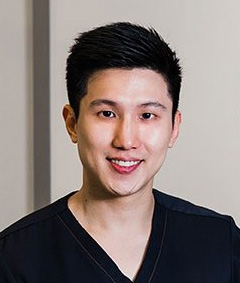
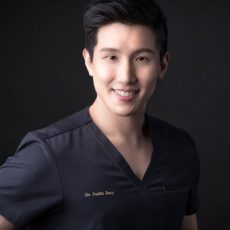
Dr Justin Boey, Medical Director at Sozo Aesthetic Clinic, has treated more than 2,000 acne scar cases since 2018 and routinely combines up to three modalities in a single visit, most often subcision, a collagen stimulator and laser. Dr Boey holds an MBBS (Singapore) from the National University of Singapore and MOH-approved Certificates of Competence in aesthetic procedures, and serves as Vice President of the Society of Aesthetic Medicine (Singapore). He trained at Harvard Medical School, the National Skin Centre and Queen Mary University of London.
Severe and long-standing cases rely on that sequencing: combining treatments in one visit, then adjusting a multi-session plan as healing progresses.
Related Reading
The same scar types on our acne scars overview apply at every severity grade, but a few interact differently once scarring reaches Grade 3–4:
- Rolling scars: broad, shallow depressions that, at severe depth, often combine subcision with a resurfacing or RF step rather than either alone
- Boxcar scars: sharply-edged depressions where severe cases lean on fractional CO2 or INFINI RF rather than lighter non-ablative options
- Ice pick scars: narrow, deep pits that Dr Boey treats with spot fractional CO2 laser or TCA CROSS, often paired with a resurfacing step for the surrounding texture in severe cases
For the sequencing logic behind combining techniques, see our single-modality vs combination comparison and combination protocol page. For recovery planning across a multi-session course, see our downtime and recovery guide.
Conclusion
Severe acne scarring needs a broader plan than a standard course, not a different kind of treatment: more sessions, more than one modality in sequence, and a doctor who adjusts the plan as healing progresses.
Speak to us for a customised assessment that accounts for your scar grade, treatment history, and how many sessions your case realistically needs.